Korean Bibimbap
Uitgelicht onder: Authentieke wereldgerechtencollectie
Korean Bibimbap is a vibrant and nutritious dish that combines various vegetables, rice, and a choice of protein, all topped with a delicious gochujang sauce.
Korean Bibimbap is not just a meal; it's a celebration of flavors and colors on your plate. Originating from Korea, this dish brings together fresh vegetables, rice, and protein, making it a wholesome and hearty option for any meal.
Why You Will Love This Recipe
- A medley of fresh vegetables packed with nutrients
- Customizable with your favorite proteins
- Can be served hot or cold for any occasion
The Essence of Bibimbap
Bibimbap, which translates to 'mixed rice,' is a quintessential Korean dish that showcases the harmony of flavors and textures. This colorful meal is not only visually appealing but also a delightful explosion of tastes. Each ingredient contributes to a well-rounded culinary experience, making it a favorite among food enthusiasts worldwide.
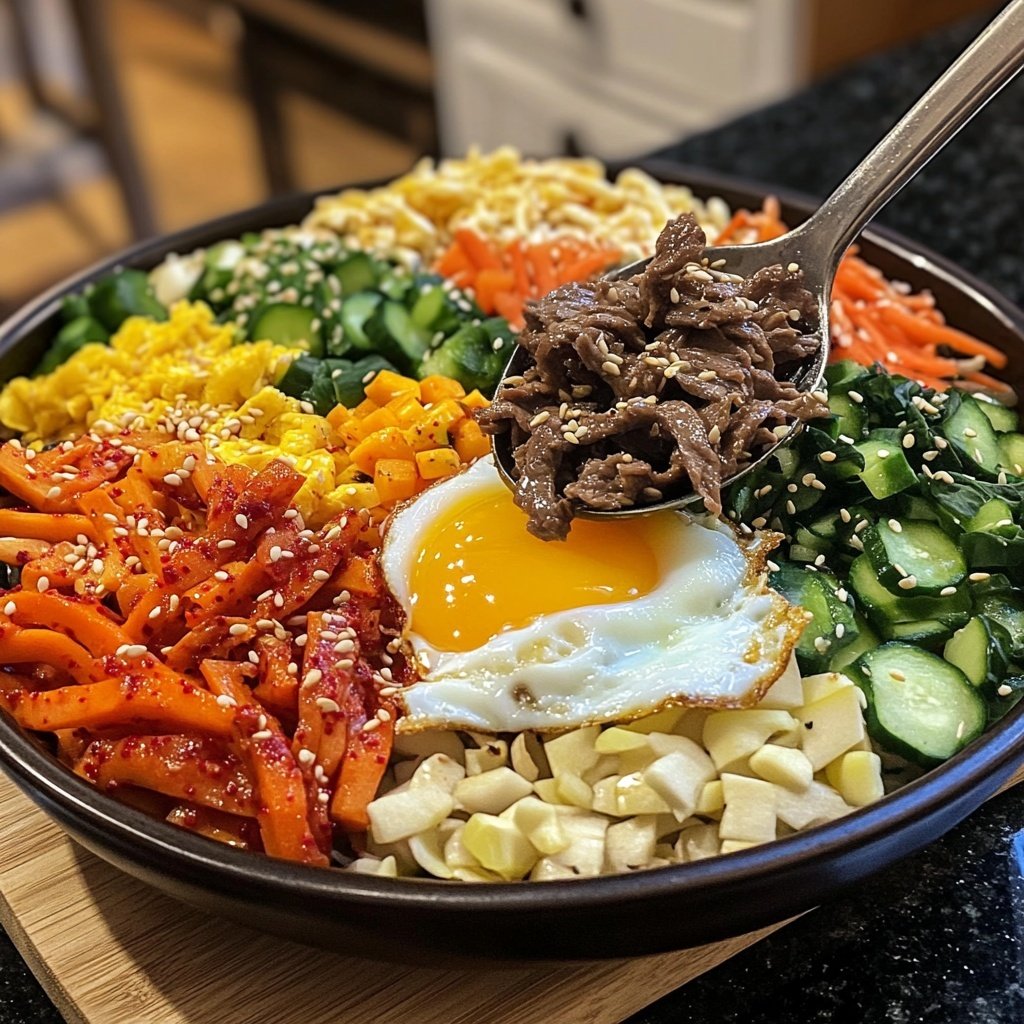
The base of bibimbap is short-grain rice, known for its sticky texture that holds together beautifully. It's complemented by a variety of vegetables, each offering unique nutrients and flavors. From the crunchy carrots and zucchini to the fresh spinach and bean sprouts, bibimbap is a celebration of fresh produce.
Traditionally, bibimbap is served in a hot stone bowl, which adds an extra layer of flavor and texture as the rice crisps slightly against the bowl's heat. However, this dish can also be enjoyed at room temperature, making it versatile for any occasion, whether it’s a family dinner or a picnic.
The Nutritional Benefits
Korean bibimbap is a powerhouse of nutrition, providing a balanced meal with carbohydrates, proteins, and a plethora of vitamins and minerals. The variety of vegetables used in this dish ensures you are getting a good dose of dietary fiber, which is essential for digestive health.
In addition to being rich in vitamins, the proteins you choose can further enhance the dish's health benefits. Whether you opt for lean beef, chicken, or plant-based tofu, each protein source provides essential amino acids that support muscle health and overall wellness.
Furthermore, the inclusion of gochujang not only adds spice and depth to the flavor profile but also contains beneficial compounds like capsaicin, known for its metabolism-boosting properties. This makes bibimbap not just a delicious choice, but a smart one too.
Customizing Your Bibimbap
One of the best features of bibimbap is its adaptability. You can easily customize this dish to suit your taste preferences or dietary restrictions. For instance, if you are vegetarian or vegan, simply omit the eggs and replace the protein with more vegetables or plant-based options.
Feel free to experiment with different vegetables based on the season or what you have on hand. Bell peppers, radishes, or even sweet potatoes can be great additions. This flexibility makes bibimbap a fantastic option for utilizing leftover vegetables in your fridge.
For an extra kick, consider adding a splash of soy sauce or a sprinkle of crushed red pepper flakes. The beauty of bibimbap lies in its ability to cater to individual tastes while still maintaining its traditional roots.
Ingredients
For the Bibimbap
- 2 cups cooked short-grain rice
- 1 cup spinach, blanched and squeezed dry
- 1 cup bean sprouts, blanched
- 1 medium carrot, julienned
- 1 zucchini, julienned
- 4 shiitake mushrooms, sliced
- 2 eggs
- 4 tablespoons gochujang (Korean chili paste)
- 2 tablespoons sesame oil
- Sesame seeds for garnish
- Green onions, sliced for garnish
For the Protein (Optional)
- 1 cup cooked beef, chicken, or tofu
Feel free to adjust the vegetables based on your preference or what you have on hand!
Instructions
Prepare the Rice
Cook the short-grain rice according to the package instructions. Once cooked, fluff with a fork and set aside.
Sauté the Vegetables
In a skillet, heat 1 tablespoon of sesame oil over medium heat. Sauté the carrots and zucchini until tender, about 3-4 minutes. Remove and set aside.
Cook the Mushrooms
In the same skillet, add another tablespoon of sesame oil and sauté the mushrooms until they are soft. Remove and set aside.
Fry the Eggs
In a separate pan, fry the eggs sunny-side up. Set aside.
Assemble the Bibimbap
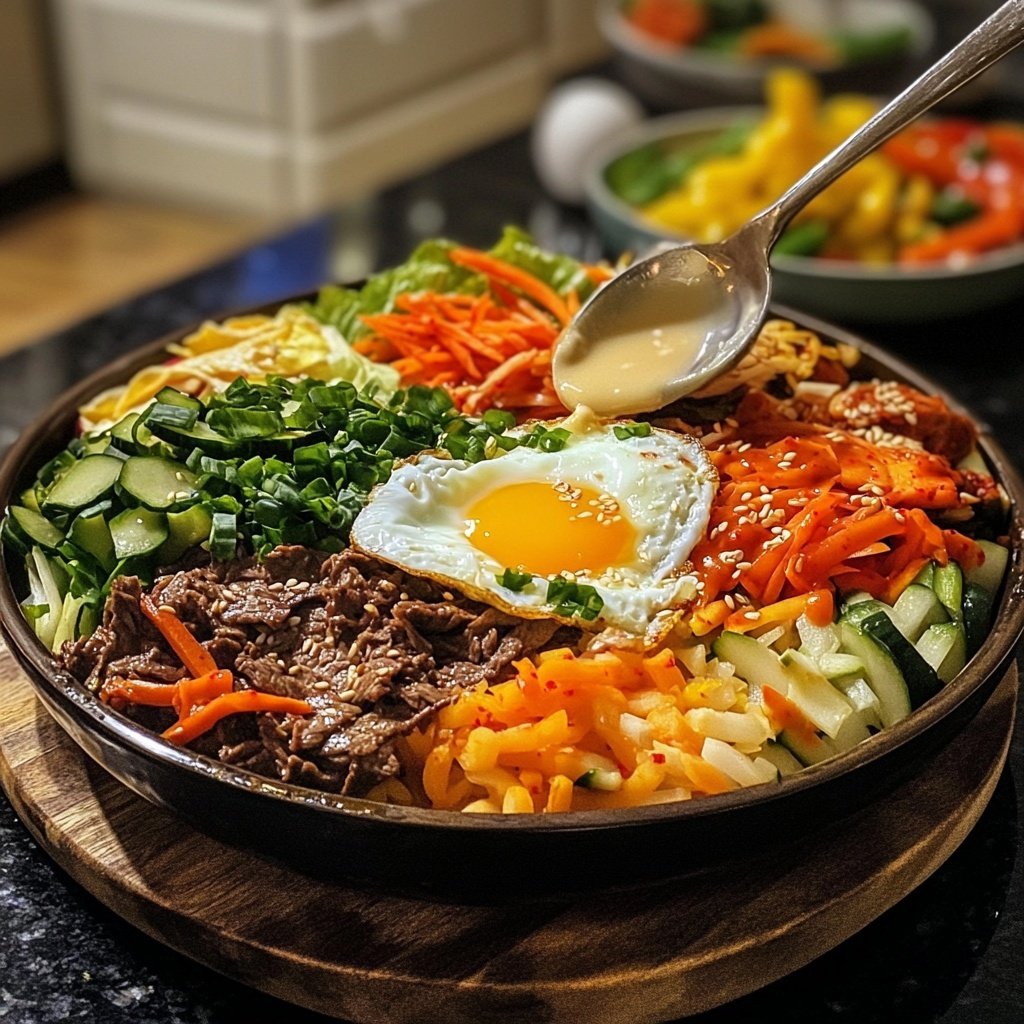
In a bowl, place a serving of rice. Arrange the sautéed vegetables, bean sprouts, and spinach on top. Add your choice of protein if using, and top with a fried egg. Drizzle with gochujang and sesame oil before serving.
Garnish and Serve
Sprinkle sesame seeds and green onions on top. Mix everything together before enjoying!
Enjoy your homemade Korean Bibimbap!
Professionele Tips
- For a vegetarian version, use tofu or omit meat altogether. Experiment with different vegetables based on seasonal availability.
Serving Suggestions
Korean bibimbap can be served as a standalone meal, but it also pairs wonderfully with other Korean side dishes, known as banchan. Items like kimchi, pickled radishes, or seasoned seaweed can elevate your bibimbap experience and offer a more authentic taste of Korean cuisine.
For a complete meal, consider serving bibimbap alongside a flavorful soup, such as miso or a spicy Korean kimchi stew. This combination not only complements the flavors of bibimbap but also provides a warming, hearty dining experience.
Storage and Reheating Tips
If you have leftover bibimbap, store the components separately to maintain the freshness and texture of each ingredient. Place the rice, vegetables, and proteins in airtight containers in the refrigerator. This way, you can easily reassemble your bibimbap for another meal.
When reheating, it's best to warm the rice and protein in the microwave or on the stovetop, ensuring they are heated through without becoming overcooked. The vegetables can be served cold or quickly sautéed to bring back their original flavors.
Experimenting with Flavors
As you become more comfortable with making bibimbap, don’t hesitate to experiment with different flavor profiles. Try incorporating unique sauces, such as a sesame dressing or spicy sriracha, to give your bibimbap a new twist.
Additionally, consider adding nuts or seeds for crunch, or using different grains like quinoa or farro instead of rice for a nutritious alternative. The possibilities are endless, and each variation can lead to a delightful new culinary adventure.
Vragen Over Recepten
→ Can I prepare Bibimbap in advance?
Yes, you can prepare the vegetables and rice ahead of time and assemble them right before serving.
→ What can I substitute for gochujang?
If you don't have gochujang, you can use a mix of miso paste and chili powder, though the flavor will differ.
→ Is Bibimbap gluten-free?
Yes, as long as you use gluten-free soy sauce and gochujang, Bibimbap can be gluten-free.
→ Can I make Bibimbap vegan?
Absolutely! Just skip the egg and use tofu or additional vegetables for protein.
Korean Bibimbap
Gemaakt door: Rachel Green
Recepttype: Authentieke wereldgerechtencollectie
Vaardigheidsniveau: Intermediate
Eindportie: 4 servings
Wat je Nodig Hebt
For the Bibimbap
- 2 cups cooked short-grain rice
- 1 cup spinach, blanched and squeezed dry
- 1 cup bean sprouts, blanched
- 1 medium carrot, julienned
- 1 zucchini, julienned
- 4 shiitake mushrooms, sliced
- 2 eggs
- 4 tablespoons gochujang (Korean chili paste)
- 2 tablespoons sesame oil
- Sesame seeds for garnish
- Green onions, sliced for garnish
For the Protein (Optional)
- 1 cup cooked beef, chicken, or tofu
Stappen
Cook the short-grain rice according to the package instructions. Once cooked, fluff with a fork and set aside.
In a skillet, heat 1 tablespoon of sesame oil over medium heat. Sauté the carrots and zucchini until tender, about 3-4 minutes. Remove and set aside.
In the same skillet, add another tablespoon of sesame oil and sauté the mushrooms until they are soft. Remove and set aside.
In a separate pan, fry the eggs sunny-side up. Set aside.
In a bowl, place a serving of rice. Arrange the sautéed vegetables, bean sprouts, and spinach on top. Add your choice of protein if using, and top with a fried egg. Drizzle with gochujang and sesame oil before serving.
Sprinkle sesame seeds and green onions on top. Mix everything together before enjoying!
Extra Tips
- For a vegetarian version, use tofu or omit meat altogether. Experiment with different vegetables based on seasonal availability.
Voedingswaarde (Per Portie)
- Calories: 500 kcal
- Total Fat: 18g
- Saturated Fat: 3g
- Cholesterol: 186mg
- Sodium: 600mg
- Total Carbohydrates: 70g
- Dietary Fiber: 5g
- Sugars: 5g
- Protein: 17g